The Mallard ( /ˈmælɑrd/ or /ˈmælərd/), or wild duck (Anas platyrhynchos), is a dabbling duck which breeds throughout the temperate and subtropical Americas, Europe, Asia, and North Africa, and has been introduced to New Zealand and Australia.
The male birds have a bright green or blue head, while the female's is light brown. The Mallard lives in wetlands, eats water plants, and is gregarious. The Mallard is the ancestor of most domestic ducks, and can interbreed with other species of genus Anas.[2] However, a potentially terminal side effect of this vast interbreeding capability is gradual genetic dilution, which is causing rarer species of ducks to become at risk for extinction.
/ˈmælɑrd/ or /ˈmælərd/), or wild duck (Anas platyrhynchos), is a dabbling duck which breeds throughout the temperate and subtropical Americas, Europe, Asia, and North Africa, and has been introduced to New Zealand and Australia.The male birds have a bright green or blue head, while the female's is light brown. The Mallard lives in wetlands, eats water plants, and is gregarious. The Mallard is the ancestor of most domestic ducks, and can interbreed with other species of genus Anas.[2] However, a potentially terminal side effect of this vast interbreeding capability is gradual genetic dilution, which is causing rarer species of ducks to become at risk for extinction.
 | |
| Female (left) and male (right) | |
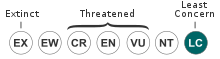
| Conservation status | |
|---|---|
Scientific classification  | |
| Kingdom: | Animalia |
| Phylum: | Chordata |
| Class: | Aves |
| Order: | Anseriformes |
| Family: | Anatidae |
| Subfamily: | Anatinae |
| Genus: | Anas |
| Species: | A. platyrhynchos |
| Binomial name | |
| Anas platyrhynchos Linnaeus, 1758 | |
| Subspecies | |
| |
 | |
| Synonyms | |
| Anas boschas Linnaeus, 1758 | |

No comments:
Post a Comment